




 New Arrivals
 Bestsellers
 Shop by Fit
 All Jeans & Trousers
 Slim Fit
 Straight Leg
 Bootcut
 Wide / Flared
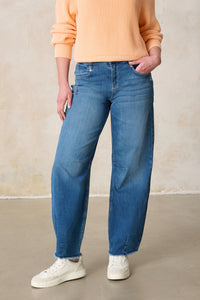 O-Shape / Barrel
 Summer Trousers
 Alle Hosen ansehen →
 Lightweight Trousers
 Lyocell Trousers
 BERMUDAS
 Geschäft finden
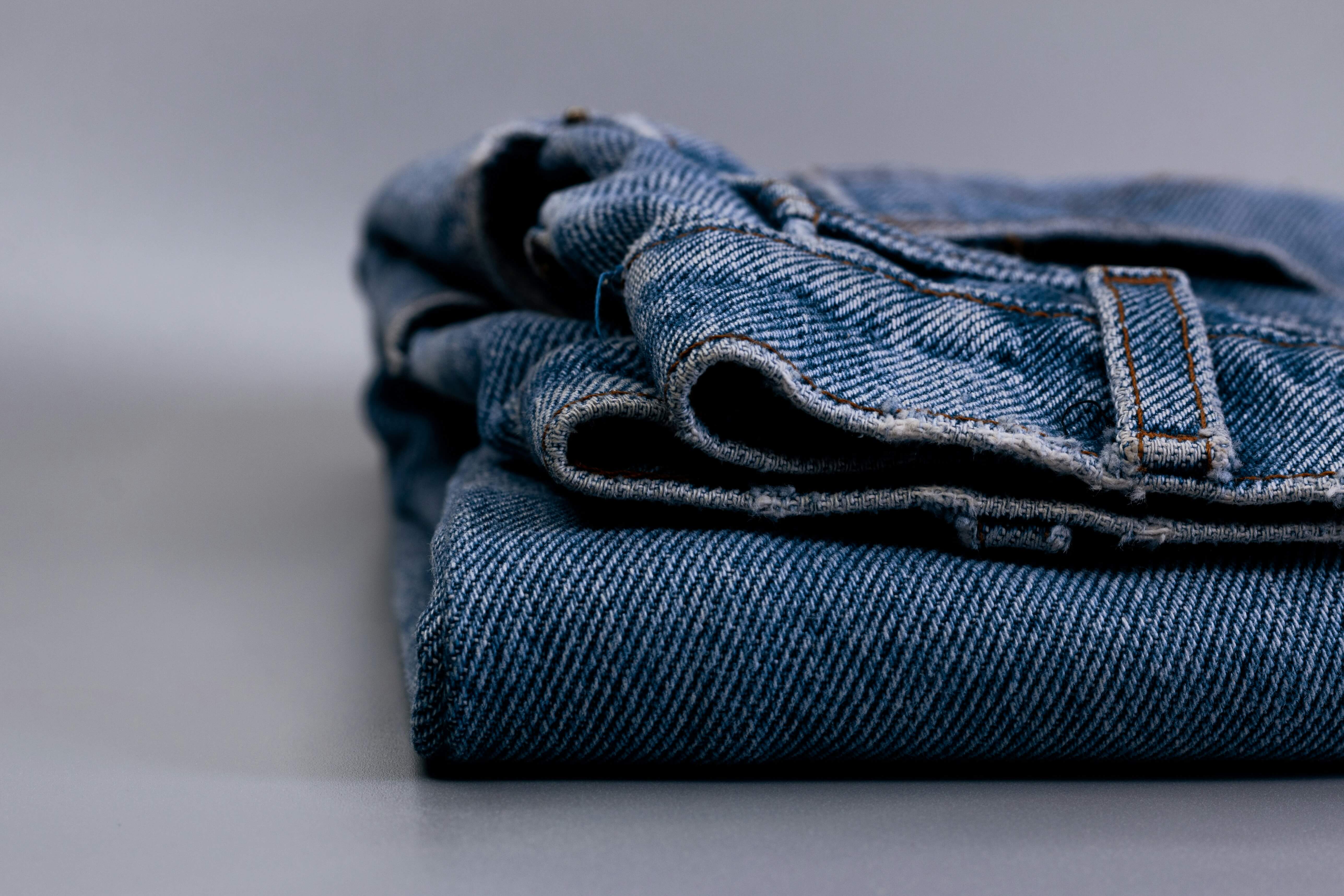
Jeans Manufacturing: How Sustainable Fashion Protects the Environment
Jeans are one of the most widely worn garments worldwide. Whether casual or elegant, they go with almost anything. Yet, behind the classic denim trousers lies one of the most environmentally damaging production chains in the fashion industry. From high water consumption and harmful chemicals to long transport routes, the production of a pair of jeans has severe ecological and social consequences.
But there is another way. We show that sustainable jeans are possible – with environmentally friendly materials, short transport routes, and fair production.
The classic production process of jeans
What does it actually cost to produce a pair of jeans? The answer varies depending on production conditions and materials. Behind every pair of jeans is a complex production process that consumes numerous natural resources and has far-reaching environmental impacts. From cotton harvesting to the finished jeans, the garment goes through several stages, often associated with high water consumption, chemical use, and long transport routes.
Cotton cultivation – The high price of natural fibres
Cotton is the main material for most jeans, yet its cultivation is extremely resource-intensive.
Cotton is one of the most water-intensive crops in the world, and its cultivation for jeans production requires enormous amounts of water. In addition to irrigating cotton fields, subsequent processing – especially dyeing, washing, and treatment – also consumes large quantities of water.
Besides high water consumption, large quantities of pesticides and chemical fertilisers are used, which pollute soil and water. This chemical burden not only endangers the environment but also the health of agricultural workers. Moreover, large-scale monoculture cultivation leads to soil erosion, causing soils to lose their fertility in the long term.

Spinning, weaving, and dyeing – A chemical challenge
After harvesting, the cotton is further processed, but this phase also entails significant environmental pollution.
First, the fibres are spun into yarn and then woven into denim fabric. Jeans get their typical blue colour through the indigo dyeing process. However, this often results in toxic residues, which are discharged unfiltered into rivers in many production countries. The chemical dye baths often contain heavy metals and other environmentally harmful substances that pollute water sources and disrupt the ecological balance in the long term.
To prevent the colour from fading, jeans are chemically treated. This involves the use of heavy metals and formaldehyde – substances that are not only harmful to health but also accumulate in the environment.
Sustainable dyeing and processing methods help minimise environmental impact. Learn more about our sustainable jeans.
Washing and treating – For the perfect look at the expense of the environment
To achieve the popular distressed or vintage look, jeans undergo various processes, often involving significant water and chemical use.
One of the most common methods is stonewashing, where jeans are washed with pumice stones. This creates the desired abrasion but consumes large amounts of water and releases fine dust particles that can be harmful to workers' health.
Even more problematic is sandblasting, which artificially ages jeans. Fine sand particles are blasted onto the fabric at high pressure, which not only releases harmful dust but also poses a high health risk to workers. This method has been banned in many countries, but it is still sometimes used illegally.
Alternatively, jeans are treated with chlorine or potassium permanganate to achieve faded effects. These chemicals are not only dangerous for workers but can also cause long-term environmental damage if not properly disposed of.
Transport routes – A pair of jeans travels halfway around the world
The fashion industry is highly globalised, and a single pair of jeans often travels thousands of kilometres before it reaches a shop or online store.
In many cases, cotton is grown in the USA, India, or China, processed into fabric in Asian countries such as Vietnam or Bangladesh, sewn together in other countries, and finally transported by sea or air freight to sales regions.
These long supply chains contribute significantly to global CO₂ emissions. Air transport is particularly problematic, causing many times more climate-damaging emissions than sea transport.
Packaging and distribution – Plastic that no one needs
In addition to the ecological burdens of production, further environmental problems arise from packaging and distribution. Many jeans are individually shrink-wrapped in plastic to protect them during transport. This packaging is often used only once and then ends up directly in the rubbish.
Shipping also creates unnecessary waste products from cardboard boxes, filling materials, and labels. In an industry that produces billions of garments annually, these packaging materials add up to enormous amounts of waste that are difficult to recycle.
Resource consumption and environmental impacts
The production of jeans has far-reaching ecological consequences that are often underestimated. Water consumption is enormous, toxic chemicals pollute soils and rivers, and long transport routes significantly increase CO₂ emissions. Added to this is the problem of microplastics and textile waste, which harm our environment in the long term.
Fast fashion exacerbates these effects even further: jeans are produced ever more cheaply, inferior materials are used, and garments are discarded after a short time. The consequences for the environment and people are severe.
Water consumption – The invisible burden of every pair of jeans
Up to 10,000 litres of water are needed to produce a single pair of jeans. This is particularly problematic in regions with water scarcity, where cotton plantations consume valuable resources and dry up entire river systems.
A large part of the water is used not only for cotton cultivation but also for subsequent processing: dyeing, washing, and finishing a pair of jeans involve high water consumption – often without sustainable wastewater treatment.
Chemicals – Danger to environment and health
Many jeans contain harmful dyes, softeners, and other chemicals that are problematic for both the environment and people.
During dyeing, toxic substances such as heavy metals and synthetic dyes often enter rivers unfiltered. This not only affects local ecosystems but also the health of people who depend on these water sources. The use of chlorine and potassium permanganate in bleaching jeans is also particularly problematic – substances that can cause respiratory problems and skin irritation.
Microplastics & Waste – An underestimated problem
Many modern jeans contain synthetic fibres such as polyester or elastane, which release microplastic particles into the water during washing. These particles enter rivers and seas, where they are ingested by animals and accumulate in the food chain.
In addition, the fast fashion industry produces enormous amounts of textile waste. Millions of jeans end up in landfills or are incinerated annually because they are made of inferior materials or quickly become unfashionable.

Social consequences of jeans production
Conventional jeans production not only causes environmental damage but also leads to significant social injustices. In many production countries, precarious working conditions, health risks, and low wages are a sad reality.
Exploitation in low-wage countries
A large proportion of jeans are manufactured in countries such as Bangladesh, India, or Pakistan, where workers often toil for less than two euros a day. Working hours are long, protective measures are lacking, and the immense pressure from the fast fashion industry forces many factories to keep wages low and ignore safety standards.
Women are particularly affected, as they make up the majority of textile workers and often have to work in insecure, exploitative conditions. Trade unions are suppressed in many producing countries, leaving workers with little opportunity to defend themselves against poor conditions.
Health risks for workers
Certain production methods expose workers to enormous health risks. Sandblasting, used to artificially age jeans, is particularly dangerous. This involves blasting fine sand particles onto the fabric at high pressure, creating harmful quartz dust. Workers exposed to this dust have a high risk of contracting silicosis (dust lung) – an incurable lung disease.
The use of toxic chemicals in dyeing and washing processes also endangers health. Many workers come into daily contact with chlorine, potassium permanganate, and heavy metals without adequate protection such as gloves or masks. In the long term, this can lead to respiratory diseases, skin problems, or even cancer.
Child labour and precarious working conditions
In many countries, children are part of the textile industry. They are used as cheap labour, especially in cotton harvesting or sewing factories – often under catastrophic conditions. Since children are particularly susceptible to health damage, this has serious consequences for their development.
But adult workers also suffer from poor working conditions. A lack of occupational safety, extreme heat in factories, and handling dangerous machinery repeatedly lead to accidents and long-term health problems. In many cases, social security is lacking, and if workers become ill or injured, they often have no financial support.
How Glücksstern.de offers sustainable solutions
Sustainability in fashion is possible – at Glücksstern, we want to show how it can be done differently. While conventional jeans production causes major ecological and social problems, Glücksstern relies on environmentally friendly materials, resource-saving manufacturing processes, and fair working conditions.
Sustainable materials
An important factor for more environmentally friendly jeans is the choice of materials. Glücksstern focuses on:
-
Organic cotton (GOTS & OEKO-TEX® certified)
Unlike conventional cotton, it grows without synthetic pesticides and consumes significantly less water. -
Cellulose fibres such as TENCEL™ Lyocell, Modal, and Viscose
These materials come from sustainable forestry and are biodegradable. They are characterised by particularly comfortable wear and are a durable alternative to conventional fibres. -
Hemp and recycled materials
Hemp is naturally resource-efficient, as it grows without pesticides and is extremely durable. Additionally, Glücksstern uses recycled polyester to reduce plastic waste and minimise environmental impact.
Environmentally friendly production
Not only the materials but also the production method makes a decisive difference. At Glücksstern, we consciously take a different path here:
-
Production in Europe
Instead of global supply chains with high CO₂ emissions, we rely on German manufacturing. This significantly reduces transport routes and ensures fair working conditions. -
No harmful chemicals
We do not use any toxic dyes or dangerous bleaching processes. Instead, only non-toxic colours and environmentally friendly dyeing techniques are used. -
Resource-saving washing processes
While conventional jeans production consumes enormous amounts of water, we rely on innovative washing technologies that drastically reduce water and energy consumption. -
Gentle production technologies
Modern laser processes replace environmentally and health-damaging methods such as sandblasting. This creates jeans with a unique look – without negative impacts on workers or nature.
We want to prove that fashion does not have to come at the expense of the environment and people. With conscious decisions for sustainable materials, responsible production, and fair working conditions, every pair of jeans becomes a durable, environmentally friendly companion.
Sustainable fashion begins with the right choice
Conventional jeans production has serious ecological and social consequences. High water consumption, harmful chemicals, and long transport routes burden the environment, while workers in many countries suffer under precarious conditions.
With sustainable materials, environmentally friendly production processes, and fair working conditions, we at Glücksstern want to set an example for responsible fashion.
Discover our sustainable jeans – for the environment and for you!

